Profile 6 of 35
Shu Lea Cheang
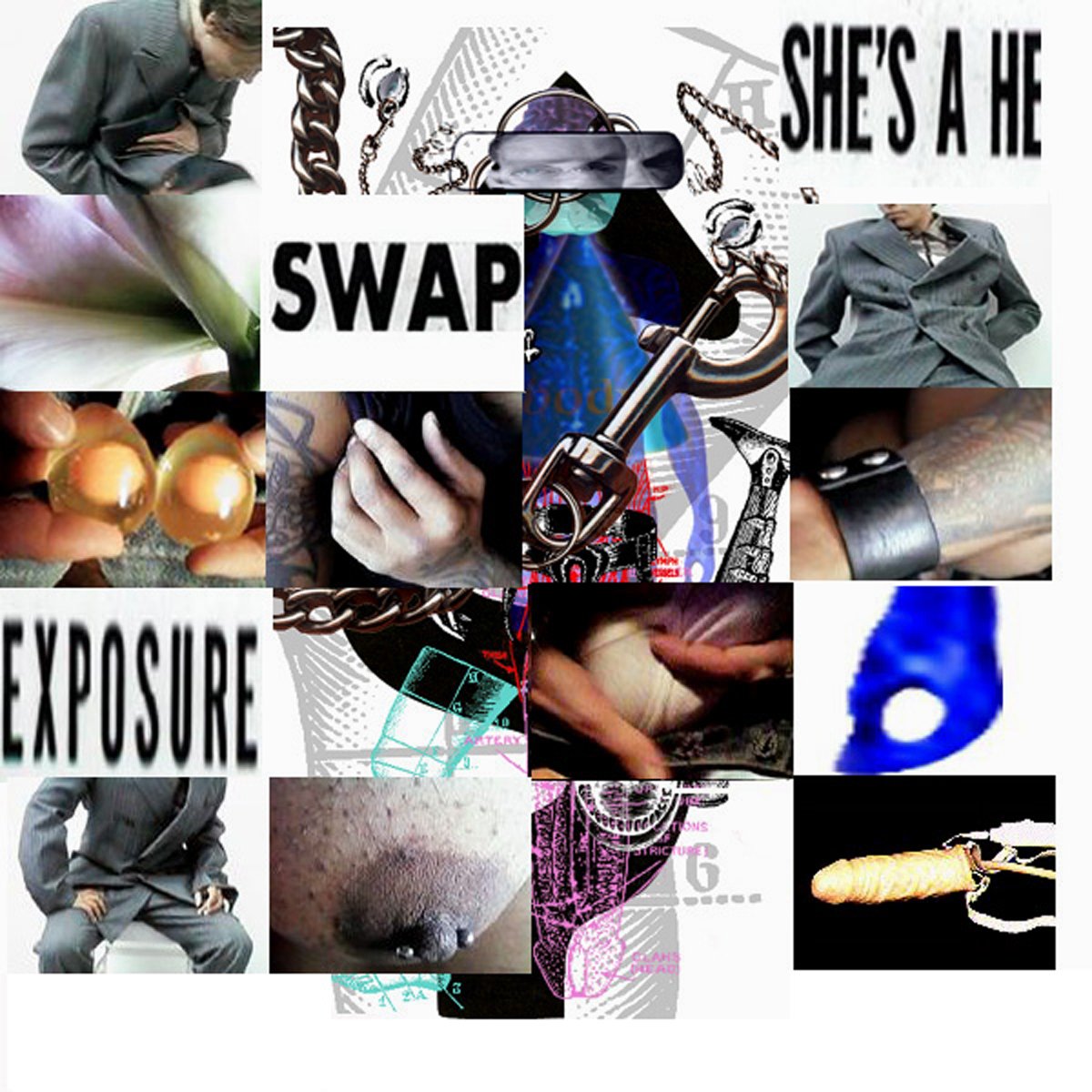
The first image presented on the Brandon Web site is a morphing restroom icon. It transforms in a continuous loop from a baby into a woman, then into a man. This simple animation neatly summarizes Teena Brandon's own experience as a young person who was born a biological woman but later chose to represent herself as a man. The site visitor then clicks through to a web page containing a grid of image fragments: anatomical diagrams of male genitalia, tattoos, pierced bodies, a figure in a man's suit, newspaper headlines, a strap-on dildo. Rolling over these images with the cursor reveals other images, each representing a component in the narrative of Brandon's life and murder. This rudimentary interaction suggests a process of gathering clues to unravel a mystery.
By choosing the Web as her primary medium for this project, Cheang suggests a connection between Brandon's story of gender bending in the physical world and the parallel phenomenon of gender play online, in which people assume online personae that don't correspond to their embodied selves. But Cheang did not limit Brandon to the Web. During the yearlong project, the site's imagery was displayed on the Video Wall at the now-defunct Guggenheim SoHo in New York. Cheang also organized public forums dealing with the social implications of the digital body, first during the World Wide Video Festival in 1998 at Amsterdam's Theatricum Anatonomicum, then in 1999 at Harvard University's Institute for the Arts and Civic Dialogue. Cheang also invited curators, critics, and forum participants to add images to the Brandon site.
Art critic Liz Kotz describes Cheang's overall body of work, which addresses a variety of timely, media-related topics ranging from music piracy to the pornography industry, as "collaborative ventures, works which cross current political issues with commercial technologies" -- characteristics that appear again and again in New Media art practices.
Cheang's use of a Web site to deal with themes of gender and identity in Brandon echoes the use of video, a new technology in the 1970s, by such feminist artists as Eleanor Antin and Martha Rosler. Like these artists, Cheang used an emerging form to examine how gender is popularly understood, categorized, and defined.